
Finding the right skills to fill empty positions is really tough. Recruitment of technicians is particularly challenging, as experience is hard to find. Where the trades were once seen as honourable, skilled manual labour fell out of fashion. While that attitude is starting to change, the shift cannot happen fast enough.
As many senior technicians are coming up to retirement age, companies risk losing their knowledge and experience. Getting younger generations to pick up the mantle is important, though it is not their only route into the industry. Fortunately, there is a growing perception that trades have more value as a career path, so we asked a distinguished panel of industry professionals how to attract the next generation of skilled workers.
We have two interesting perspectives from Mazzella Companies. Candice Gouge joined as director of lifelong learning two years ago to focus on developing recruitment strategy and talent programmes. Kevin Brewer, director of crane services, has worked as a technician, in sales and in leadership roles. Now, he is integral to developing the company’s talent pool.
Chelsea Liston, managing executive at MHI is keenly involved in the material handling, logistics and the supply chain association’s Young Professionals Network (YPN). Margie Nijs, VP of talent management and engagement at Konecranes, is keenly focused on talent development, communications and analytics. Jasen Doyle, director of training at Interplay Company’s International Training International (ITI) has extensive experience as an instructor and a technical expert.
Liz Hunter, recently appointed as supply chain manager at Nucor subsidiary The David J Joseph Company (DJJ), who is also chair of AIST Young Professionals Membership Committee, also contributed to the discussion.
What career paths exist in this industry that young professionals may not be aware of?
Kevin Brewer: Technicians are typically multiskilled. They are welders, millwrights, mechanics, electricians, installers – some are all of those. But there are also administrative, managerial and sales positions. Then there are other parts of the business like HR, recruitment, marketing and project management. We need a whole lot more than just crane technicians.
Chelsea Liston: Many people think of material handling careers as being limited to engineering, sales or field service, but there’s a lot more. You can explore roles in marketing, project management and system integration, or even training and workforce development, where you might design certification programmes or lead educational initiatives.
Margie Nijs: People can be surprised by how many different directions a career here can take. Beyond the expected technical roles, we also have opportunities in project management, engineering, safety, sales, cybersecurity, AI and IT, data analytics, people and culture and sustainability – to mention just a few. Many colleagues move internally between functions, which keeps careers varied and interesting.
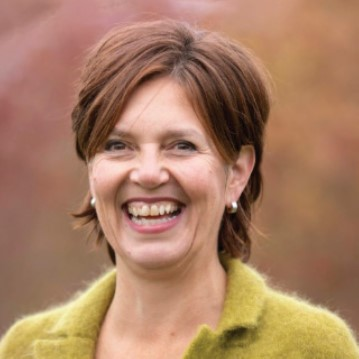
Jasen Doyle: A lot of people only think about the hands-on roles, like crane operators or riggers, but this industry is much broader than that. There are opportunities in lift planning, field engineering, inspections, safety management and training. The management and planning side of lifting operations has expanded significantly over the past couple of decades. As standards evolve and more emphasis is placed on worker qualification, there are growing opportunities for young professionals to enter the training and education side of the industry as well.
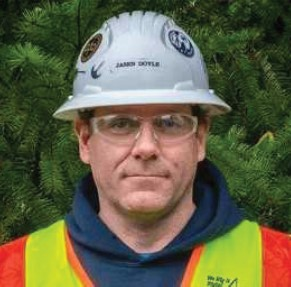
Liz Hunter: I believe the path is anything that interests you. You can start as an operator and move your way up to management; you can start in technical and move to commercial.
What skills (technical and non-technical) are most valuable early in a career in this field?
KB: When you are starting out, the intangibles are just as important as technical skills. They are the things people have as part of their character, like the willingness to show up and learn, to be on time, to be focused on the job. Technicians must be good at working with their hands and curious about mechanical and electrical systems and motors. I think of high school age kids who are fascinated by fixing cars and tinkering with machines.
People who like variety make good crane technicians. In sales, you look for people with problem-solving skills, who like to look beyond the surface and dig deeper. They are always asking why and do not just accept the first answer they get. The service team is often the face of the company and the brand, so they must have the right soft skills and be good at communicating with customers and internal partners.
MN: This depends really on the role, but curiosity, critical thinking, positivity and a can-do mentality go a long way. You don’t need to know everything on day one. Strong communication skills, respect for safety and the ability to adapt quickly help people succeed early, especially as technology plays a growing role across the industry.
JD: Professionals entering the field should develop a solid understanding of load dynamics, rigging fundamentals and the equipment they’re using. For crane operators, that includes being able to read and interpret load charts and lift plans and understand inspection requirements and safety standards. However, that technical knowledge alone isn’t enough. Situational awareness is incredibly important in lifting operations, as is communication.
CL: A mix of technical know-how and strong communication is key. People who can take complex technical issues and explain them clearly to teams or customers often stand out. It’s important to keep building both sets of skills throughout your career. One way to grow non-technical skills is through joining community networks like the Young Professionals Network of MHI, where roundtable discussions cover practical topics like time management and prioritisation and overcoming imposter syndrome.
What misconceptions do young professionals often have about working in lifting equipment and material handling?
KB: More than there being misconceptions about the industry, the real problem is that there is no awareness of it. Young people don’t even know that this industry is a thing.
MN: Many assume the work is old-fashioned or mechanical. In reality, the industry is becoming more digital and data-driven every year. Others might think the work is very routine-focused, when actually it involves problem-solving, customer interaction and continuous learning. Also, some may not realise how many development and mobility opportunities exist across teams and countries.
JD: One of the biggest misconceptions is that this work is mostly physical labour. In reality, a large portion of the work involves planning, coordination and engineering. Most of the work involved in a critical lift happens long before the equipment ever moves. In many cases, about 75% of a critical lift is spent on planning. Another misconception relates to career earnings potential. Historically, young professionals may not have viewed material handling careers as particularly lucrative, but with the current shortage of skilled professionals, the earning potential in this field is very competitive.
CL: A lot of people think the industry is ‘old school’ or purely mechanical. In reality, it’s becoming increasingly hi-tech, with innovations like smart sensors, digital inspection tools, remote monitoring systems and automated lifting solutions. It’s a field where technology and engineering go hand-in-hand.
How can mentorship improve safety and overall performance in crane operations and inspections?
Candice Gouge: We don’t have a formal mentorship programme, but we have been working through a professional development programme (PDP). We make sure that someone in the company has responsibility for development. That is the lifelong learning team, which is there for people who want development and promotion. We put together a personal plan based on growth that the team member is looking for. Sometimes there is an informal mentor helping with the development process.
We are working on a formal mentoring programme to capture knowledge and leave a legacy from the retiring professionals. It is about succession planning for people on the PDP programme and people who want to be mentors. It is also for people who are in new-to-leadership roles. We don’t want to promote people who have no leadership experience, but they can’t get promoted without experience, so the idea is to put scaffolding around new leaders.
KB: It allows people to work with experienced colleagues and ties in with the apprenticeship programmes for technicians. For lifting mechanics, we have a four-year programme that includes some classroom time and some on the job learning, which involves some partnering with senior technicians to learn the tricks of the trade, the nuances of the business and transfer senior knowledge.
MN: Mentorship makes a huge difference because it connects new employees with people who’ve learned from real-world experience. A mentor can explain not just what to do, but why, and help build the judgment that keeps people safe. It also builds confidence as newcomers feel supported.
JD: Mentorship is one of the most important ways to improve safety because it helps people build experience the right way. For a long time, a lot of people in this industry learned through trial and error, and we’ve moved beyond that. A strong mentorship approach should follow a crawl, walk, run model where people learn the fundamentals first and gain experience alongside knowledgeable professionals.
How can companies structure mentorship programmes that actually work in the real world?
CG: It requires a level of commitment from mentors because it takes time out of their day. Mentors have to be in good performance standing and want to help others grow. You need a structure for how mentoring goes, including a cadence to meetings, and mentors must be trained in what a good mentor looks like and know what are good things to share. The process also needs to be monitored through regular check-ins and there needs to be a clear goal.
KB: Commitment on both parts is a necessity. There must be a defined structure for what they will be learning, and guidelines on how they will learn it. Without that, there is no way it will work. You need to know what road to drive down, or you’ll never get to where you’re going. And a management review or a scorecard is required so that the effectiveness of mentorship is based on more than just an opinion.
MN: The best programmes are simple ones: clear expectations, the right mentor match, time set aside for learning and honest, open conversations. When mentors share their own stories and walk mentees through practical situations step-by-step, learning becomes much more meaningful. And that works both ways!
JD: Effective mentorship programmes combine multiple training approaches rather than relying on a single method. Blended learning paths are one of the most effective ways to structure training and mentorship. That can include online learning, simulation-based training and instructor-led instruction. Online learning helps build foundational knowledge, simulators can reduce risk while people develop skills and instructor-led training gives companies flexibility to address individual needs and specific skill gaps.
CL: Mentorship works best when it’s structured and intentional. Clear expectations, suggested meeting schedules, discussion topics and goal-setting templates help keep both mentors and mentees on track. Check-ins and feedback loops also make a big difference. When done thoughtfully, mentorship not only develops talent but also strengthens company culture and builds future leaders.
How are automation, remote monitoring and smart controls changing skill requirements?
KB: We are starting to feel the impact of AI in this industry, and I think we are just seeing the tip of the iceberg. Over the next five years that landscape will completely change. We need people with soft skills and an understanding of how AI works and how it can help them to do their job more effectively. Those people will have an advantage over those who don’t.
We are not seeing equipment specifically using AI necessarily, though some manufacturers use AI in cameras and monitoring, with some influence on processes and workflows. We are seeing more entry-level automation. The technology is a lot more affordable now, so we are seeing base level collision avoidance, zones in production facilities that can be blocked off to prevent cranes carrying loads over them, and some fully automated systems where someone just enters data and tells the crane where to go and what to do.
MN: Technology is becoming a bigger part of everyone’s job, but you don’t need to be an engineer to succeed. What’s important is being open to learning digital tools and understanding how data helps us make better decisions. Automation and remote support simply mean that teamwork and communication are even more important than before.
What are the biggest retention challenges for young professionals in this industry?
KB: There is not a lot of patience in the current workforce for growth. They won’t work for 15 years and wait their turn, they want growth quickly, they want a defined career path with a clear direction and they want clear steps to reach the next level.
CG: One sticking point is that people want to be able to grow and move around the company fast. It is hard to get people in the first place, but the need to constantly promote and move people is a challenge, so we need to back fill as we move people around. It is a circular challenge to fill the bench.
MN: Some younger professionals may not initially see our industry as modern or flexible, even though it’s evolving fast. The work can be demanding at times, and if career steps aren’t clearly visible, people may feel unsure about their future. That’s why transparent development paths, regular development discussions and learning and development opportunities are so important.
JD: One of the biggest challenges in retaining young professionals is helping them see the long-term career potential. Developing real expertise takes time. In a world where people often expect quick results, that learning curve can sometimes be discouraging. Organisations that succeed in retaining talent tend to make career progression more visible and invest consistently in high-quality training and development. They create clear advancement paths and continue investing in their people to retain them longer.
CL: One of the biggest challenges is career visibility. Young professionals want to know how their current role connects to growth opportunities. Mentorship and professional development are also key, as early-career employees value guidance and opportunities to expand their skills. Another major factor is worklife balance. Flexibility and a supportive culture matter more than ever.
What advice would you give your 25-year-old self entering this industry today?
KB: I’ve done a lot in my career. I started out in an entry-level position not knowing the business at all. I had an administrative position for two years, then I was a service technician, then I had roles in management, then sales, then branch management. I became a regional manager and now I am director of the entire crane service organisation. So, I have run the whole gamut.
My suggestion would be to just soak it all in and not corner myself in any one aspect of the business. There are not many limitations on what you can do. The more you know, the more control you have over your own destiny. My years as a technician before taking on a sales role were invaluable. They gave me an advantage over my competition the majority of the time.
MN: Don’t worry about asking for support. Reaching out to colleagues to ask for help provides you with a wonderful opportunity to learn beyond expectations and will establish lifelong relationships.
CL: There are a few things I’d tell myself. First, build relationships across the industry. Second, ask questions constantly. This industry is always evolving, so staying curious is the best way to keep learning and stay ahead. Finally, develop both technical and soft skills. Technical expertise is important, but communication, collaboration and problem-solving are what make you an effective leader.
LH: It’s a marathon not a sprint. Enjoy where you are and be patient. There is much to glean from where you are at but if you try to rush advancement you will miss it.
What setbacks taught you the most – and how did you turn them into growth opportunities?
KB: My biggest setback was I got really frustrated with leadership in an organisation I worked for, so I left the industry rather than looking for another option. I left for four years, and that forced me to take a couple of steps backwards. I have no regrets, but if I had stayed in industry I could have moved further along sooner. Everybody’s situation is different, so you have to weigh it out, but I didn’t want to be on the road and travelling while my kids were really young. Sometimes what seems like it is not the best for your career could be the best move for your family. You have to think about your priorities.
MN: It may sound cliché, but learning from mistakes is the most powerful. You need to have an open and curious mindset and be willing to reflect. It is very helpful to have colleagues around you whom you can ask for honest feedback.


