
Not everyone who comes from Spain will call themselves a Spaniard. Those from the Basque region in the north of the country, centred around the thriving industrial port of Bilbao, claim a different cultural heritage and in many ways a different identity to their compatriots across Spain.
One such individual is Sergio Robledo, who is now general manager of GH Cranes & Components USA, but was once just a young man with a desire to travel and a passion for riding the best waves.
“I grew up in the Basque Country and surfing was my passion – and it still is,” he remarks.
“When I was young, I had no idea what I wanted to be, but I was a good student and graduated with a degree in business administration at 23, and the next year I started to work in a bank. I thought that was what I would do for the rest of my life.”
Then fate opened a door that would change the course of Robledo’s life. While working at Banco Bilbao Vizcaya (BBVA), which was founded in the Basque region and has grown to become one of the world’s largest banks, he was studying for a masters degree in international commerce when he learnt about a scholarship scheme run by the Spanish government that would enable young people to spend a year working at one of the country’s embassies overseas.
“There were only 35 or 40 scholarships granted each year, and the idea was that you could spend time at a foreign embassy to help Spanish companies invest in that country,” Robledo explains. “If you have languages, study hard and pass a difficult exam you can be eligible for one of them, and I was lucky enough to be chosen. So, I quit the bank and went to Sao Paulo, though I can’t say my parents were very happy about it.”
A Brazilian adventure
Back in 2000, Brazil was in a period of transition. The 1990s had brought instability, but following the 1999 currency crisis in which the Real was devalued and de-pegged from the US dollar, the economy started to steadily recover. Exports of key raw materials were rising, and the government was taking concrete steps to reassure overseas investors. Despite many challenges, the focus was firmly on economic stability, fiscal responsibility and market-oriented reforms.
“There was a lot of foreign investment at the time, and the currency had stabilised, so I was able to help many Spanish companies. I had arrived in Brazil looking for something different, and I wanted to get away from darkness and rain and into the bright, warm and sunny environment in Sao Paulo,” Robledo explains.
“Brazil has some good waves to surf and some good weather. I was 25, and I had arrived in a place with music, fun, excitement, so I bought a car and a surfboard, and I lived in a small apartment that was more than enough for me, and I enjoyed myself.”
Amidst the fun, there was hard work to do, and Robledo had applied himself to opening up the Brazilian market to Spanish companies. One such company was GH Cranes, which had been working to set up a local operation since 1998, when Vicente Guerra – one of the four brothers, the ‘Guerra hermanos’, who had founded the company in Olaberria in 1958 – arrived with a team to assess the viability of establishing a local entity.
They met Robledo through the embassy and asked him to help with in-depth market research, the results of which showed promising signs that a local venture could succeed. Next, they asked him to put the findings of that research into practice, and in 2001, he became the company’s sole employee in Brazil.
The beginning of the relationship was in many ways inauspicious. The Spanish word for ‘hoist’ sounded almost unintelligible for Robledo in his first meeting with the GH team. Yet there was clearly a strong personal connection, an enthusiasm to start something new and a mutual understanding that Brazil was a land of opportunity in which GH Cranes could prosper.
More than that, however, there was a strong sense that the way ahead should be steady, measured and sensible.
“GH is still a family-owned company, so everything is measured, gradual and progressive,” says Robledo. “It is not a case of big private equity money coming in and buying up everything quickly. Instead we wanted – and still want today – steady growth in markets where there is a real opportunity. We saw that in Brazil, Mexico, Argentina and many other places.”
Planting a seed
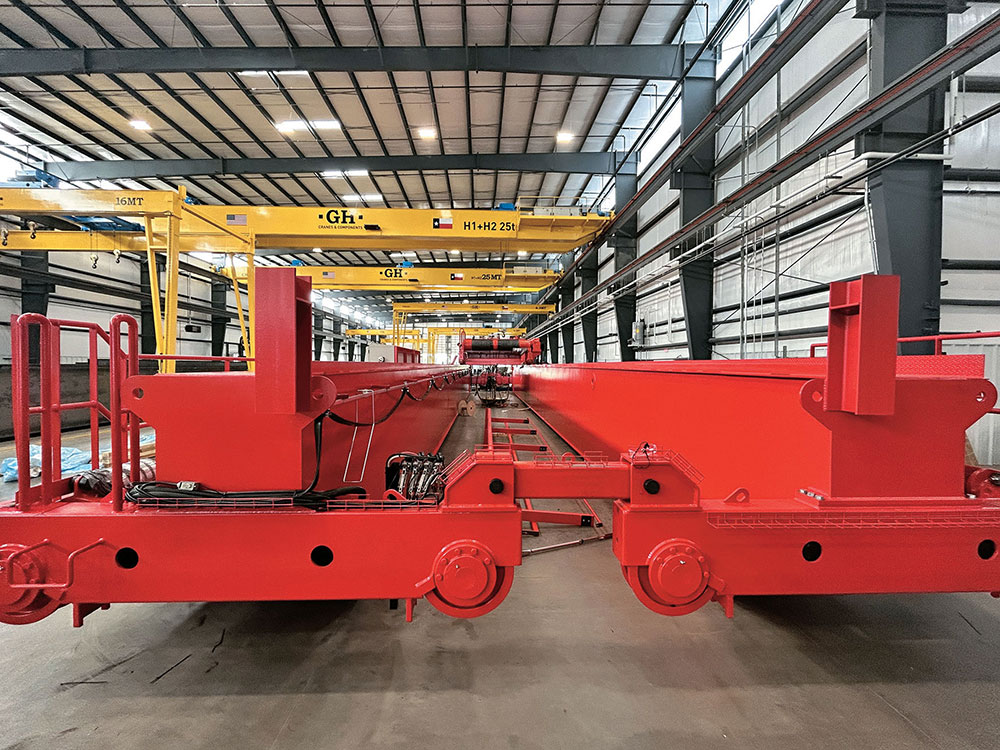
The seed for growth in Brazil was an agreement with local manufacturer, Rovela, to work together in a way that made the best of complementary capabilities. Rovela would focus on chain hoist and low-weight operations, while GH would handle everything else.
“We started with a local partner and a small network of salespeople, then we came in with our products and processes to manufacture cranes. We relied on local people to develop the market in terms of sales. Partnering with a small manufacturer that wanted to grow its business was a good platform, though it only lasted for six months. Partnerships are sometimes difficult and you might each have different interests,” explains Robledo.
“We tried many different strategies because there was no magic 8-ball to give us the answers.” The local enterprise started small and at that time Argentina was struggling economically with a severe recession and a failing currency, so GH pulled partners from there to assist with growing the business in Brazil. For two years, the growing team worked hard to make contacts with key local companies and put the brand out there.
All the while, growth was led by demand, enabling expansion in the sales team and the addition of specialists in electrical and mechanical engineering, as well as administrative assistants.
GH makes all of its own components for its hoists, so nothing is bought in. But the Brazilian operation started out just as a warehouse rather than a manufacturing site. It stocked just ten different components for cranes, and when those sold well it proved that the market could handle a broader range of components, so another ten were added to the portfolio.
“Then suddenly you are talking to companies like Embraer, Brazil’s leading manufacturer of planes and one of the world leaders in the aerospace industry. So, in 2003, a big client changed the game for us and became a great reference for other customers.”
That surge in demand meant that Robledo had to oversee a period of rapid growth, bring in more local sales people and build a network of trusted sales and service personnel. GH steadily grew state by state across Brazil but never rushed.
“The key is finding a way to grow steadily and not too fast, but also not too slow,” adds Robledo.
“You need to find the rhythm of growth.”
Eventually, GH was manufacturing so many cranes in Brazil, working with three different manufacturing partners, that it needed to build its own plant. The parent company took a risk and invested heavily in a new manufacturing site, which opened in 2011. Since then, it has gone from strength to strength and it continues to grow to this day, though Robledo has since moved on to head the company’s US operations.
From being its sole employee in 2001, he left in 2015 to come to the US and start over again, leaving behind an operation of 100 people, one of the leading overhead crane manufacturers in Brazil.
Moving stateside
By that time, Robledo had a new set of priorities, first and foremost his family.
“My wife is Brazilian and we have two kids. Having kids changed the game for me. Kids don’t walk to school in Brazil because it is not safe. It is a country that is fun when you are single and surfing, but when you have kids, you want to give them a better future. Brazil is amazing but it can also be dangerous, so coming to the US was the right move.
“I knew that a project in the US was going on, and it was similar to what had happened in Brazil, so I asked my wife if she was ready for another challenge. I came to Texas for a weekend and saw that it was a great place with very nice people who are polite, educated and welcoming. The experience here has been great.”
Once again, GH started small. It had identified a partner in the US and was pursuing the same strategy of selling components to other crane manufacturers. The owner of one dealer in Texas was getting ready to sell his company. He was in his 70s and his kids did not want to take over the business, so GH bought it and started looking for someone to handle the transition. Robledo applied for the job, spoke to the Guerra family and they accepted because they knew how successful he had been in Brazil.
If Bilbao to Brazil had been a culture shock, so was moving to Dallas.
“I can only explain it like this – in Brazil they have samba, in the US we have Metallica. That is the difference. It is not that one is better than the other, they are just different,” he says.
“Life is fast-paced here, and people have strong personalities, so I had to get used to that. If someone asks for a quote they expect it the next day, but in Brazil they can wait maybe ten days. If Americans have a good idea, they just want to get on and do it. That is great, but it took a lot of getting used to. For someone from Spain who then lived in Brazil, coming to the US can be overwhelming.”
Despite the dramatic change in his surroundings and the need to shift gears to acclimatise to the different pace of life in Texas, Robledo did not take too long to integrate. The fact that GH managed to find its way smoothly into the US market no doubt helped. Taking a similar pathway as it had in Brazil, the company took its time to study the market, find its opening and let demand drive its growth.
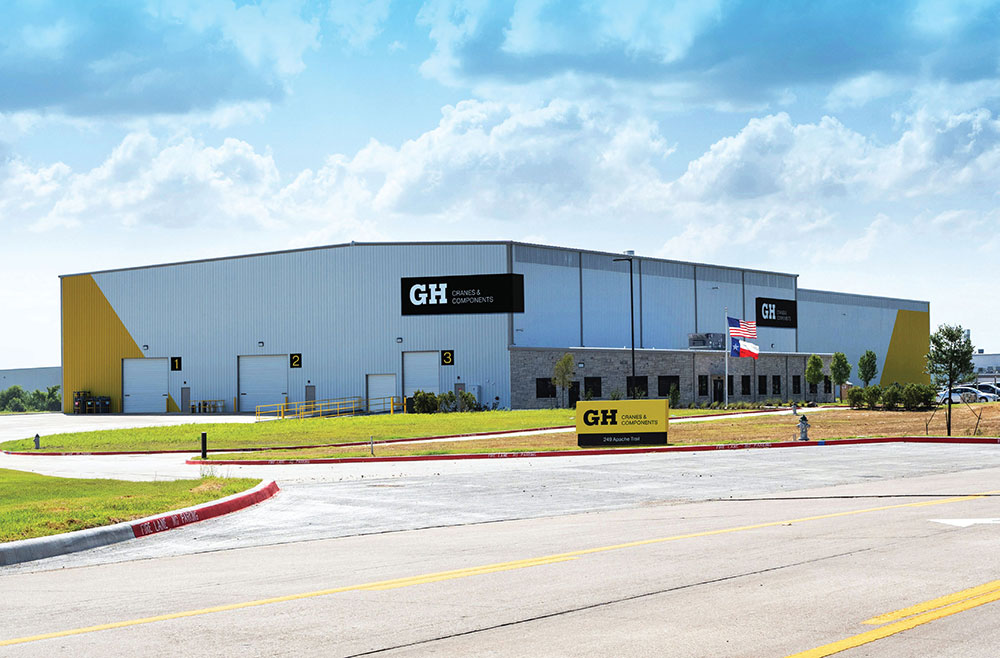
In 2025, GH had reached the point where it no longer had sufficient capacity to manufacture enough components to meet demand at the relatively small site that had been run by the company it acquired ten years previously, so it invested heavily in a huge new facility, from which it supplies some of the biggest companies in the US.
Its supply network is already nationwide, but it continues to expand its footprint little by little.
True to its culture of consistency, hard work and patience, it has no desire to rush.
“That is the way GH works,” states Robledo.
“The owners always remind us that Rome was not built in a day, and the company is not focused on short-term returns by any means. That is an advantage of not being owned by private equity.”
Leading by example
Robledo is the first to praise the owners of GH, citing their work ethic, their family values and their willingness to get their hands dirty.
“The owners in Spain lead by example. They are first to arrive in the morning and last to leave at night. They don’t drive flashier cars than their employees. The second and third generations of the family are now involved and they are not just managers, they work in other jobs in the company as part of the workforce.”
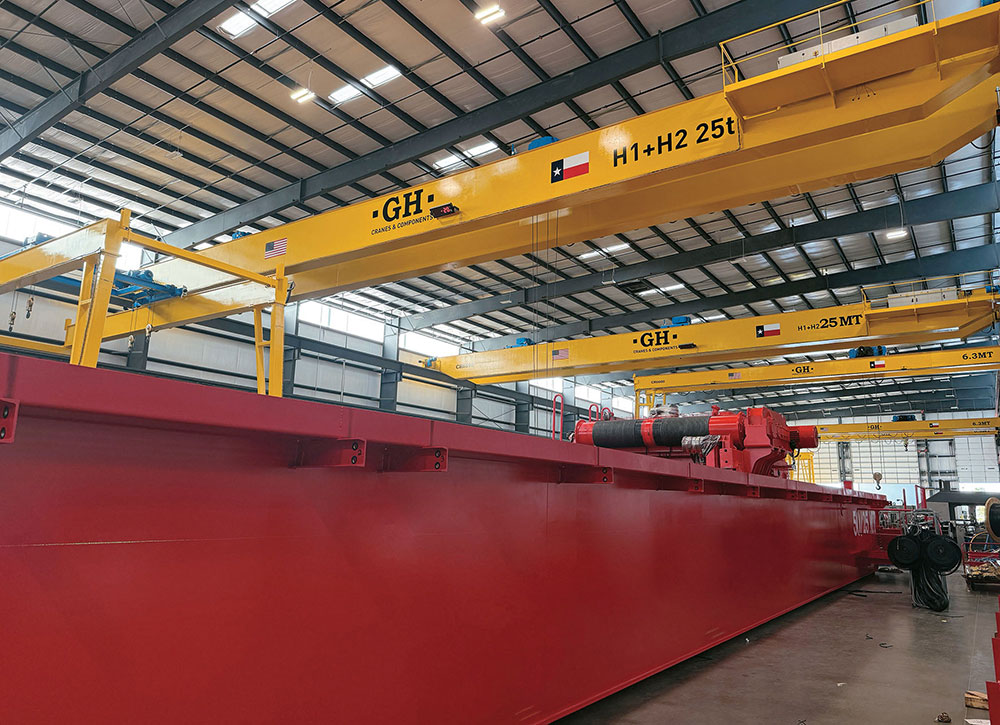
GH is still family owned, and it manufactures all of the components for its own cranes. It does not integrate parts from other manufacturers.
Although it has a long track record that goes back more than 65 years, and has manufactured more than 125,000 cranes, the company maintains the same values it had from the early days – honesty, innovation and a people-centred approach.
It is an approach that has left a big impression on Robledo, who believes those values and the culture they create will be essential in addressing the many challenges the industry will have to face in the years ahead.
“Last year was very challenging with tariffs. It was a very bad time for the industry as a whole, but particularly for us, as we import many of our materials. Anyone who imports – and that includes many of our competitors – has usually agreed on prices, but then costs change with the tariffs, so there is a lot of uncertainty. So, 2025 was challenging, but now I am optimistic. We have just spent millions on our new manufacturing site, and we are seeing a lot of projects and new leads.
“It is a characteristic of the US that, regardless of who is in government, people work hard and are very practical. They have a plan and they go for it, even when conditions are uncertain. We see a lot of data centres are being built in the US, for example, and that kind of infrastructure requires power, transformers and many more components, and that moves a lot in the economy. We also see that the US is investing a lot of money in shipyards, defence and other key sectors.”
For Robledo, the future of the industry seems bright, though getting there might involve some hardship and some patience. But that is just part and parcel of how GH operates. It has managed to thrive, expanding across the globe from its base in the Basque country thanks to its focus on steady growth and long-term benefit rather than short-term gain, and a strong sense that everyone in the organisation has a key role to play in delivering success.
“It is very much like a family,” Robledo observes. “I remember once I was on my way to an 8am meeting and I had an accident on the way. I had crashed my father’s car, so I had to let the owners of GH know that I was going to be late and explain what had happened. The next thing I know, Victor Guerra – the owner of GH – has come to pick me up. And he paid for my father’s car.
“Doing right by people is the most important thing here, which is one reason we have nice people who work hard. It is all about respect, and that carries through to our customers, as well as our employees.”
Robledo freely admits that he likes surfing more than he likes cranes. The beach, the sea and the waves are what he craves, though there is a thrill in working with big car manufacturers, tunnelling companies that need gantry cranes, train manufacturers and many more. Texas may not have the world’s best surfing beaches, but there are plenty of lakes where he can be towed behind a speedboat.
“The week is for working, the weekends are for surfing. All my workouts are about getting ready for the opportunity for the big wave surfing in Hawaii.”
It seems the US has given a warm welcome to both GH and to Robledo, and their story will no doubt have many more chapters.


