
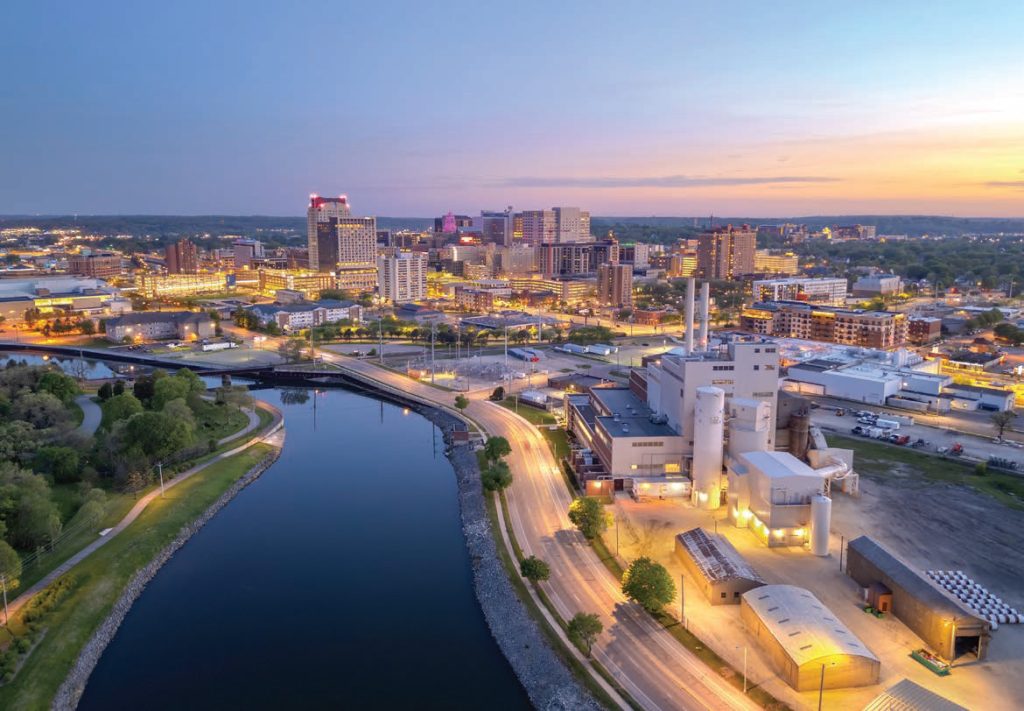
Echoing its motto ‘L’Étoile du Nord’ – the North Star – Minnesota is certainly something of a hidden gem when it comes to industrial development, though the state is not without its own economic challenges. Lying in the Upper Midwest, it nestles among the Great Lakes, with Lake Superior and the state of Wisconsin to the east, Iowa to the south, North and South Dakota to the west and on its northern border the Canadian provinces of Manitoba and Ontario.
It is technically the most northerly state of the Upper 48, as its Northwest Angle – an isolated, non-contiguous part of Lake of the Woods County that joins on to Manitoba – is the northernmost point of the contiguous US. Its location puts it near the geographic centre of North America, and from this derives a key advantage that makes it an attractive hub for business.
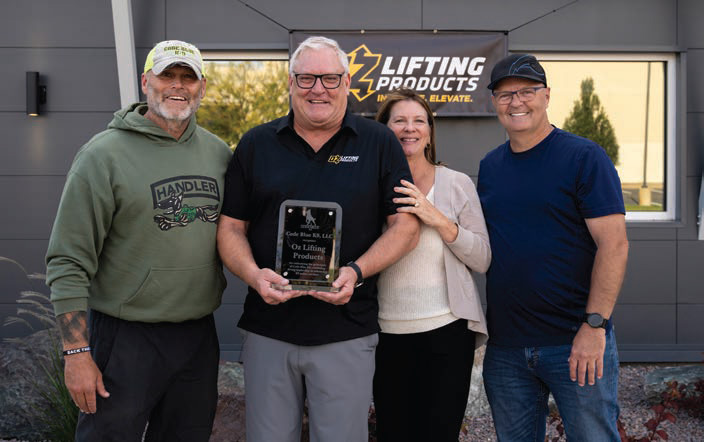
Originally from Chicago, Illinois, president at OZ Lifting Steve Napieralski has been a Minnesota resident for many years and has built a successful crane and hoist business there, and although much of his business is outside the state, he has also seen many opportunities locally.
“Minnesota is basically an agricultural state,” he explains. “We are in the Mississippi River valley and beyond the valley it is all agriculture, but there is some industry in the southeast corner of the state. We are 40 minutes from the Mayo Clinic, which is in a billion-dollar expansion phase, and in the north there are mining operations that rely on lifting equipment.”
“We mainly serve customers outside the state, and they account for around more than 95% of our business, but Minnesota is well located as a distribution hub,” he adds.
Fastenal, a leading distributor of industrial and construction products, including fasteners, tools and supplies, is headquartered in Winona, one the state’s key cities. To the west lies Rochester, the state’s third most populous city after the twin cities of Minneapolis and Saint Paul. This dynamic city, just 90 minutes south of the Twin Cities and around five hours from Chicago, is home to the Mayo Clinic, which was recently declared the world’s leading hospital for the seventh year in a row in rankings put together by Newsweek.
“In terms of the size of impactful sectors, healthcare is a major driver of the economy, and many insurance companies are also based here,” says Sean O’Neil, the senior director of economic development and research at the Minnesota Chamber of Commerce. “Medical technology, medical devices and key parts of the medical supply chain are here, and innovative companies like Medtronic and Boston Scientific have a major presence here, too.”
The healthcare and medical innovation ecosystem took root in the state in the second half of the 20th century, and companies such as Medtronic started building a presence there from the 1950s through 1990s. Now, as the state seeks to attract investment in a diverse range of industries, there is growth in data centres and data infrastructure, as the world tries to meet the huge demand created by the ever-growing use of artificial intelligence.
“We have some advantages in attracting that infrastructure, which is why it is a growing area,” says O’Neil. “As the US has focused on increasing the production of semi-conductors, we have been a leader in the manufacture of mainframe computers, and we also have many semi-conductor fabrication companies here that are growing.”
“Manufacturing is the second big industry, and there are lots of Fortune 500 manufacturing companies here,” he adds. “In fact, the state is a national hub for manufacturing, and a distinctive feature of this industry is that it is very diverse. We rank first or second in terms of the concentration of jobs in 17 key sub-sectors of the manufacturing industry compared to national average. Some industries like manufacturing, agriculture and iron mining go back a long way, and the state is home to many natural resource-based industries.”
The cleantech and its growing supply chain is also making its presence felt in the state. Although Minnesota has not yet become home to a large amount of electric vehicle (EV) manufacturing, it has attracted investment in innovative projects for EV battery storage. The state’s strong mining sector means it is a natural source of metals and minerals that go into cleantech innovations, and the more projects are expected to take root in the years ahead.
The Minnesota nice
Minnesota, also known as the Land of 10,000 Lakes, comes with a stereotype about the character of its people. Like many stereotypes, it has some basis in truth. The ‘Minnesota nice’ is a cultural trait that implies that state’s residents are unusually courteous, mild-mannered and sometimes reserved.
“People still hold doors open and wave at you,” says Napieralski. “The Minnesota nice is a real thing. It is a great location, and I love living here. There are many places where industry is not polluting the air, and if you like the outdoors then this is the perfect state – a beautiful place to live.”
Nevertheless, the state faces a number of significant challenges in terms of economic development. While 17 Fortune 500 companies are headquartered there – most of which were founded in Minnesota – it faces many challenges if it is to remain a place where entrepreneurs can take risks and find the support and the resources to thrive.
“We need a more competitive business environment that will stimulate a homegrown economy with businesses starting here,” observes O’Neil. “We want to build on our existing strengths but also identify potential industries into which we could expand. There are some real competitive advantages here compared to other states.”
“Manufacturing is absolutely an opportunity that we are thinking about,” he adds. “To the extent that we are in an era where there is more focus on reshoring or onshoring manufacturing, we are looking to compete for those investments.”
One advantage that the state is able to leverage in order to compete effectively is its highly educated workforce. For example, the state is in the top ten in terms of the proportion of adults with a college degree. However, some real barriers remain, particularly in regard to the state’s tax regime and the reg climate, which O’Niel admits is more challenging for business than in some other states.
“We are one of the higher taxation states in terms of both individual and corporate taxation, and we have had some increasing regulatory challenges around labour mandates and permitting processes, which can take a long time for companies, but the Chamber of Commerce is an advocacy organisation and we are communicating with policymakers to see how we can be more competitive as manufacturing is reshored,” he says.
Reshoring is a key target of the current Republican administration, which has used tariffs as a key tool in global trade. The idea is to make importing more expensive and, therefore, encourage domestic manufacturing. Whether that strategy is successful remains to be seen, but there is certainly some short-term pain involved.
One source reports that “at a federal level, the tariffs are killing us,” referring specifically to the blanket 55% tariff imposed on China by the Trump administration in the summer, and the ultimatum that the rate could increase to 100% by November. “Competitors in Japan or Taiwan don’t have to deal with that, and it has probably cost me millions of dollars already,” adds our source.
Since then, China and the US have struck a deal that will suspend the global implementation of expansive new export controls on rare earths and related measures announced in October, and the US will lower tariffs on Chinese imports by 10%. Nevertheless, the spectre of a trade war is never far away, in an unprecedentedly volatile and unpredictable geopolitical environment.
At the state level, there is a widespread belief that taxes are too high, particularly for the small companies that are the drivers of the state’s economy. The state’s GDP and job growth rates are slower than in previous decades and lag behind the national average, so although Minnesota has a highly developed economy, it must use some tax and regulatory levers to ensure it sustains sufficient levels of growth over the long term.
This is particularly important when viewed against the backdrop of an ageing population and a slowing birth rate, which means fewer people are coming into the workforce and businesses will increasingly find it hard to recruit the number of people they need to expand.
“To attract and maintain the size of the workforce, free up investment and improve the business climate, the costs of doing business here – including the tax rate – need to change,” O’Neil believes. “Tax can be changed by the local state legislature, but other cost factors like industrial electricity prices, health insurance premiums for employees and other significant business and supply chain costs need to change.”
“We have done a lot of work on regulatory complexity, including environmental permitting,” he adds. “The state has high environmental and emissions standards, and we are not looking to lower them, but we can speed up the permitting process. It is more about the efficiency with which programmes are administered. Taking less time to issue a rigorous air quality permit, for example, could be an important criterion in getting businesses to set up faster.”
The industry gets a lift
There is clearly a drive to change the environment in which small and medium-sized businesses operate in Minnesota. Many of the state’s crane and hoist companies – among them Oz Lifting, Sharrow, Winona-based Thern, TC/American Crane Company in Elk River – stand to benefit.
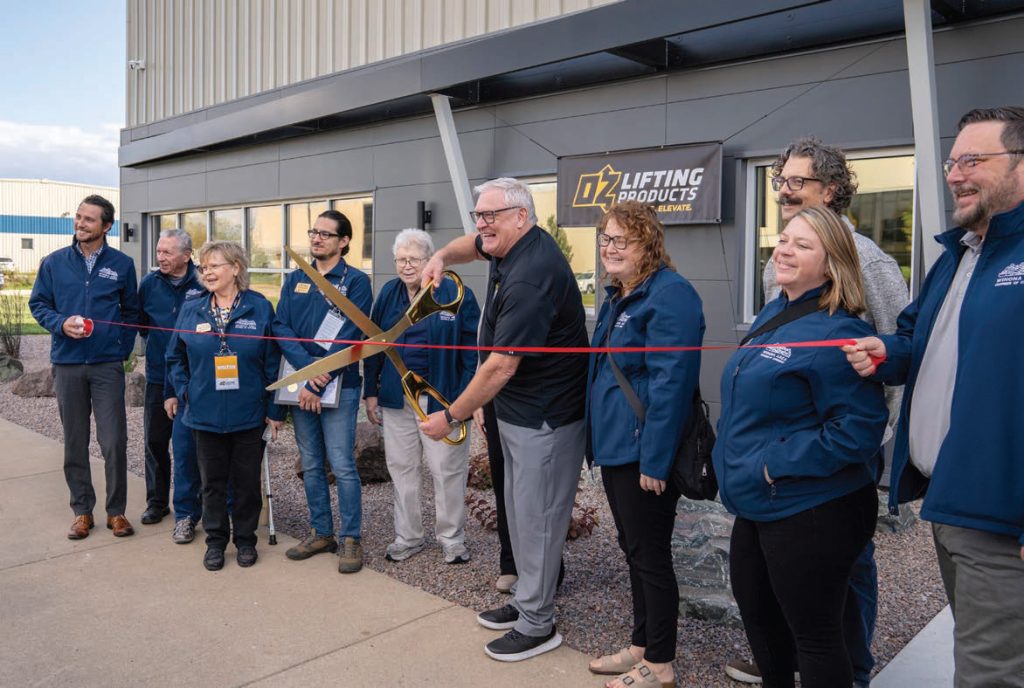
Some are already in an expansion phase, and Oz Lifting’s new facility is one of the success stories in the state, suggesting good prospects for the local crane and hoist industry going forward. In early October, OZ Lifting held its grand opening for a new facility in Winona, marking the culmination of a major project to construct a new building four times larger than its previous location.
“When I started OZ Lifting Products as a small, family-owned business 20 years ago, I never imagined the scale of what we’d build together, yet we’ve held on to those same small-business values every step of the way,” said Napieralski at the opening ceremony. “The support and excitement around our grand opening really reflect how far we’ve come, and we’re looking forward to continuing that momentum as we grow into the future.”
The company, which was launched in 2004 with just two staff now has 30 full-time employees and a global distributor network. The new 40,000ft2 facility, which sits on a five-acre lot, represents the company’s fourth relocation over 20 years, and it will not only enable the business to expand its production, warehousing and innovation capabilities, but also serves as a platform to facilitate further expansions further down the line.
Visitors to the opening were able to interact with davit cranes and base styles, as well as hoists, clamps, trolleys and winches. They were also able to experience recent innovations, including the 250lb capacity parapet davit crane base, which is compatible with the XR Series 250 davit crane, and can be temporarily installed on rooftops without causing damage on installation or removal.
“This is our fourth and last move,” Napieralski told OCH. “We have enough space to expand right here on this lot. It is a great new facility, much larger than the last one, and we have already filled it up. When we look back on where we were at and what we did at the last site, we really were butt to butt, and we had small offices. Now, it is much more fun to come to work.”
The company has created a flexible space within the building and is able to adapt it to its specific needs as they change. Products can now be built more safely and more efficiently.
Furthermore, there is more room for prototyping and exploring the new ideas that will shape the company’s future.
“For us, the number one driver is innovation,” says Napieralski. “Our new facility is even located on Innovation Drive. Personally, this is the only industry I know, and since I began in 1988, I have always been involved in lifting and rigging. Now, we have seven patents and some new products on the docket to launch next year or the year after.”

The company was the first to bring composite technology to the industry in the US, where the majority of products are still made with steel. Now, people can see a boom section made of composite little more than 80lbs lift a load of 1,200lbs.
The latest expansion was the logical next phase for a company so keen on innovation. The new site is not dedicated to manufacturing products. It has plasma cutters, welding capability and CNC machines for cutting, drilling and shaping materials with high precision, but everything is geared towards prototyping and assembly.
Napieralski sees a potential tipping point in the future where ROI will come from investment in manufacturing, but for now the company is focused on coming up with new concept that its engineers can work up into new products, Whether that is in the form of 3D printed prototypes of blueprint that marketing and sales can clear for manufacture, the ideas will be improved and refined before going to vendors who will quote for the manufacturing process.
“At some point, we will invest in manufacturing equipment, though that is not an area in which I have any specialist skills,” says Napieralski. “I am a sales guy, but manufacturing will be the next step, I just don’t know when. For now, we are profitable, but there will be a tipping point. We are not operating in the best business climate, but we will keep innovating and bringing new products to the market.”
Whether that positivity is just a reflection of the optimism that comes with the Minnesota nice, or whether it is born from the efforts the state is making to encourage business development and industrial growth, the state certainly has an opportunity to help its crane and hoist industry grow.


